Z is for Zeus
Do you believe in God(s) ? It’s an interesting question and one I find in my reading that few authors deal with. Maybe it’s just the books I’m choosing.
Recently I read Gone, by Michael Grant and although it’s a real page turner one of the things that struck me (besides being a bit scared of the darkness inside, I’m not afraid to admit it!) was how several of the characters had faith in God (a male it seemed and organized Christian God). It wasn’t a large part of the book but it was part of the fabric of the universe for the main characters. What happened to them challenged some of their faith in a God. It made sense for that town and those characters but I am so unused to a discussion of God that it stood out for me.
My son wants to read Gone (after reading The Magnificent Twelve he thinks Michael Grant is the funniest writer in the universe) but we won’t let him. He’s very upset about this as he’s turning 10 in three days and has read Ship Breaker (my fault), The Hunger Games (my fault – I’m a bad Daddy), and all the Harry Potter books (okay – now he earned the right to read them so back off!). My wife, who is infinitely more wise than me, is the one who put her foot down and said no, not now, to Gone.
You see in our community a boy recently died. He was thirteen years old. The whole story is not known as we do not know the family well, but we had been to their home a couple of times with other families for school social events. The boy got an infection that turned into meningitis and he died. It all happened in one week and I am still shaking a bit about it because, as a parent, my first thought was – what if this happened to my son? These kinds of things make you question God(s)/Goddess(es) and faith. My son barely remembered the boy as it had been a few years since they’d last seen each other and the boy was three years older. My son seemed okay with the news. It seemed to pass by him and through him with only a small ripple. He was more concerned for us then himself, it seemed.
So in Gone (this is not a spoiler as it happens on page one) everyone over the age of 14 poofs – disappears and the world that Michael Grant creates is scary and fascinating. But not right now for my son. No poofs. Maybe next year or in the fall with some time and perspective. It is impossible to answer the question, why did a child die? How do you find a reason for that?
The book I’m working on now is about God, tangentially. It is about loss of faith and maybe (I don’t know yet how it will work out) gaining of faith back. It’s a real challenge for me as I was born a Jew, brought up Methodist, tried some Catholicism (youth groups have girls in them and I was a teenager but I really did go on that retreat to ask some questions of the priest – which I did. For example: Why do you say there’s only one God if there’s a father, son, and holy ghost? Isn’t that three? And what about the virgin Mary? What’s up with that? I was not popular and I did not get a concrete answer. I digress.), wandered into paganism, studied Buddhism and Hinduism and presently believe in a higher cosmic spirit of the feminine kind.
What I love about Greek mythology and all polytheistic practices is the ability to have all these different aspects of the great cosmic soul. Zeus of the lightning bolts needs all the other Gods and Goddesses to balance him out. They balance each other, yin and yang, water and fire, a satvic existence on the higher plane. without balance there is chaos. And yet in our lives, there is chaos. It seems in one way or another, in one corner of the world or another, with violence and death there is chaos. There are plateaus of balance and seemingly random acts of chaos. It makes me wonder as a parent and it makes me wonder as a human and it makes me wonder as a writer.
This is my last post on the A-Z challenge and I’ve made it through 26 posts relating to or pertaining to things that are Greek, at least from my perspective. I hope you’ve enjoyed the journey even half as much as I have.
Y is for Yakoots
 There is no letter Y in Greek, either ancient or modern. And what’s interesting is some posit that that’s why there are so few English words beginning with the letter Y – since Greek and Latin are root languages for English. So why Yakoots and what’s the connection. Work with me, Ill get there.
First, Yakoots is a word for a nomadic Mongolian tribe native of Northern Siberia most likely of Turkish stock who are also mainly pastoral in their habits (which I like to think means they listen to a pastor a lot, but I could be wrong). There is some Mongol in my heritage – being a Jew whose family was pushed, plundered, nudged, conquered, and pogromed from one part of the Ukraine east, south, and north from Poland to Hungary and Rumania (and eventually to the US but I’m pretty sure that was by boat right around 1900 – hello Bronx and Brooklyn!)
Second it is one very cool sounding word that could easily be a curse if you think about the way it sounds – it is almost spit out of the mouth.
Third is reminds me of Yakutsk from RISK which is one of the great world conquest and domination games ever made – just behind Diplomacy which if you’ve never played you haven’t fully lived (it is a great simulation of the diplomatic wrangling of pre WWI that should be played in every World History class). Any word that reminds me of the game RISK is a good word.
Fourth, in Greek the word for nothing is tipota. And Yakoots with it’s image of life in Northern Siberia, desolate, cold, harsh, reflects this for me. As a writer being faced with nothing – the blank page – is both the most exciting and horrifying of prospects. Exciting because we will cross into Siberia and put footprints across the snow, filling that page with words. Horrifying because the journey may very well take us deep within ourselves and every inward journey is a journey not to be taken lightly.
X is for Xerxes
 Xerxes is son of Darius who attempted an invasion of Greece and conquered a good part of the ancient world stopping at Greece (oh those damned stubborn Greeks). At 36 he took over his dad’s job and became self-proclaimed king of Persia, Great King, King of Kings, and King of Nations. Let’s just say he had a thing for being king. But the Greeks defeat him eventually and he goes back home only to be murdered by the commander of his royal bodyguard. It’s not always good to be a king.
So Xerxes is not Greek but he is an antagonist for the Greeks and the one for which great and heroic acts are required to be performed in order to defeat him – take Thermopylae for example and the stand of the 300 Spartans. And that’s just the one gets all the press. The naval battle at Salamis is a pretty neat little fight also and on a grand scale (let the Greek Fire loose!).
Antagonists then are the subject and Xerxes is the model. Is he evil? (Probably not but he certainly does have issues.) Does your antagonist have to be evil? (No, but it can make the story stronger sometimes if you’re playing up the good vs. evil angle.) Do you even need an antagonist? (You may not but you do need something for your protagonist to struggle towards or against even if it’s only him or her self.) Can your antagonist and your protagonist be the same person? (Yes, literally if you have a good Kirk bad Kirk going like that episode of Star Trek in the original series with William Shatner splitting himself and giving us smiling Shatner and sweating snearing Shatner. Or, as I mentioned before you can have your protagonist have to overcome his or her own limitations like lack of courage, or facing their past.)
Regardless of who the antagonist is, I like characters that I end up feeling for or seeing why they end up being who they are. It’s more complicated and nuanced a story but I find I enjoy them more. Would Darth Vader be the same if we didn’t eventually find out that he was Luke’s father and at some point regrets what he has done? Understanding why someone does bad things can help us feel for them, as uncomfortable as that can be. And if I feel for the bad guy I will feel that much more involved with the good guy. This is probably why a good bad guy can so easily steal a show, novel, movie. If written well, they are just so interesting.
Who are your favorite, authentic, fully fleshed antagonists (people, places, or pieces of self)?
W is for Word
 There is no W in Greek but work with me. Words are fascinating. If you’re a writer or a reader then you already know this. As a writer we manipulate our readers through a use of language to make readers think, see, and feel. It is a great power that if used well can initiate revolution.
Why do and did people study Greek language, use ancient Greek words? The theory was and remains (though not as strongly anymore) that if you wanted to learn how to think critically and discover the great ideas you needed to study Greek and Latin because that’s when it (civilization) really began in a meaningful way. That’s when the first great thinkers like Socrates, Plato, Aeschylus, and Euripides (You rip a dese and I rip a dose nyuk nyuk nyuk) did their things. And if you read in their words, not a translation, then you read purely and without another’s perception of their words. I never studied Greek or Latin, just mythology and the great thinkers in the context of a history class, not a study of their ideas through words. In some ways I wish I had, or maybe… someday I still will. In any case, I’ve done that on my own since then because of personal interest. But words, for a writer remain a fascination.
Two books I’ve read recently take words as subjects unto themselves, make them plot points and character builders. They stand out for me as really great reads and partially because of the way this technique is used. Goliath, by Scot Westerfeld uses the word perspicacious in a fascinating way through the second and third books of his series. A Loris (read to find out, I won’t spoil it here but it’s a Darwinist genetically manipulated creature) is called perspicacious and the word is repeated enough times to know it’s important but you really need to read the whole book to understand its fully meaning in the context of actions and narrative. I loved the word and the way this one word stood out in the narrative like a bright christmas light calling to me to think, think, think what it might mean.
The other book is A.S.King’s Please Ignore Vera Dietz. Vera, the protagonist’s, favorite class in HS is vocab. She is a wordsmith and uses new words in sentences as part of the narrative to show us what she thinks and how she feels. Her father (spoiler here, though still mysterious) has a sign taped to his back at one point with the word parsimonious on it. It is a culmination of his story all wrapped up in one word. I love the way the author did this. When I finished this book I spent a while staring out the window and thinking how the lives I’d just finished reading about reflected my reality – what their stories meant to me.
The best stories do this and the words make up the tale and the tale is what makes us think.
V is for Venus
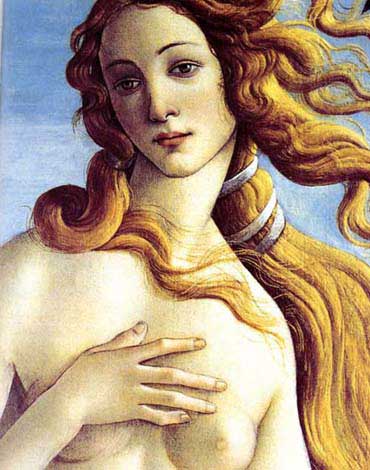 I was thinking vulpine (cunning) or vorpal (deadly) or valetudinarian (anxious about health) or vafrous (sly) but… I’m sticking with my it’s all Greek to me theme and working my way through the hard letters. A vastidity (vastness) of words in Greek starting with a V, there are not. Actually there are none. There’s no V in Greek. So… I skipped a bit ahead in time and chose Venus who is the Roman version of Aphrodite, Goddess of love. Though because she’s Roman and not Greek she has her own spin on the love thing. She is not always venerous (lustful) or venary (in pursuit of sexual gratification), though she can be at times. She was not born but emerged out of the sea-foam, probably covered in varec (seaweed). But let us not vapulate (flog) the V anymore and use this as a vincular (connective) moment.
Just how important is a love story to your work? I’ve never thought of this in terms of my writing at least not in the context of do I write love stories? . I’ve not set out to write a love story (except for the first novel I ever wrote which must stay in the dark dark underworld of a drawer covered in dust and buried beneath later works even though it sometimes calls to me late at night to let it be free) before. Usually a story comes to mind and it may or may not have a love story in it. I find love in stories, happens, many times whether I want it to or not. What’s interesting to me is when I talk about this called love, I wonder who you, the reader imagine are the lovers and what kind of love it is. Are they male and female, two men, two females? Is it a love triangle? Love hexagon? Is there such a thing? What are the limitations we and society put on such things?
In my book Open Wounds my protagonist, Cyd Wymann, struggles with love – love from and for parents, parent figures, boys who are his friends and brothers, and a girl. Relationships are complicated and yet they are what make so many narratives pulse, whether there is love, ambivalence, or hate involved between the characters. A theme I find myself coming back to again and again in my work is the love of a boy for his father (or father figure) or what happens when there is none.
What are the themes of love that echo in your work? Which ones are violactic (flying above) and which are sequestered in the viridarium (Roman Garden)? Sorry, I couldn’t help myself.


 Lunievicz