
Deimos kai Phobos (Horror and Fear)
 Deimos and Phobos are the moons of Mars – named after the sons of the Greek god Ares (Roman Mars). It seems so many things about Mars are war-like or resonate with the actions of war. Deimos means horror and Phobos means fear in Greek. I never knew this.
John Carter is of Earth and Mars and he is war-like as are all the Martians in the John Carter stories of Edgar Rice Boroughs. I’m drifting a bit but lets see where it goes.
How can war, something that is both horrific and to be afraid of, also be romanticized? It seems every generation plays with these two pieces of the war puzzle. Isn’t that what video games do for us today – allow us to play at warfare without getting hurt? I struggle with this as a writer who writes about war.
Today the weapons used in warfare are taken for granted – explosives, automatic weapons, missiles. We are used to them in a sense. They are on TV. They are on our visual radar. Can you image how terrifying it was to see them for the first time? The first time seeing an armored tank, a flamethrower, a mortar, a machine gun, large artillery shells and barrages that would make the earth shake, your ears bleed – that could stop your heart from beating? My chest tightens just thinking about it.
I wonder about this as a reader who reads about war – fantasy, science fiction, historical, non-fiction – and a writer who writes about it.
Cimmerian
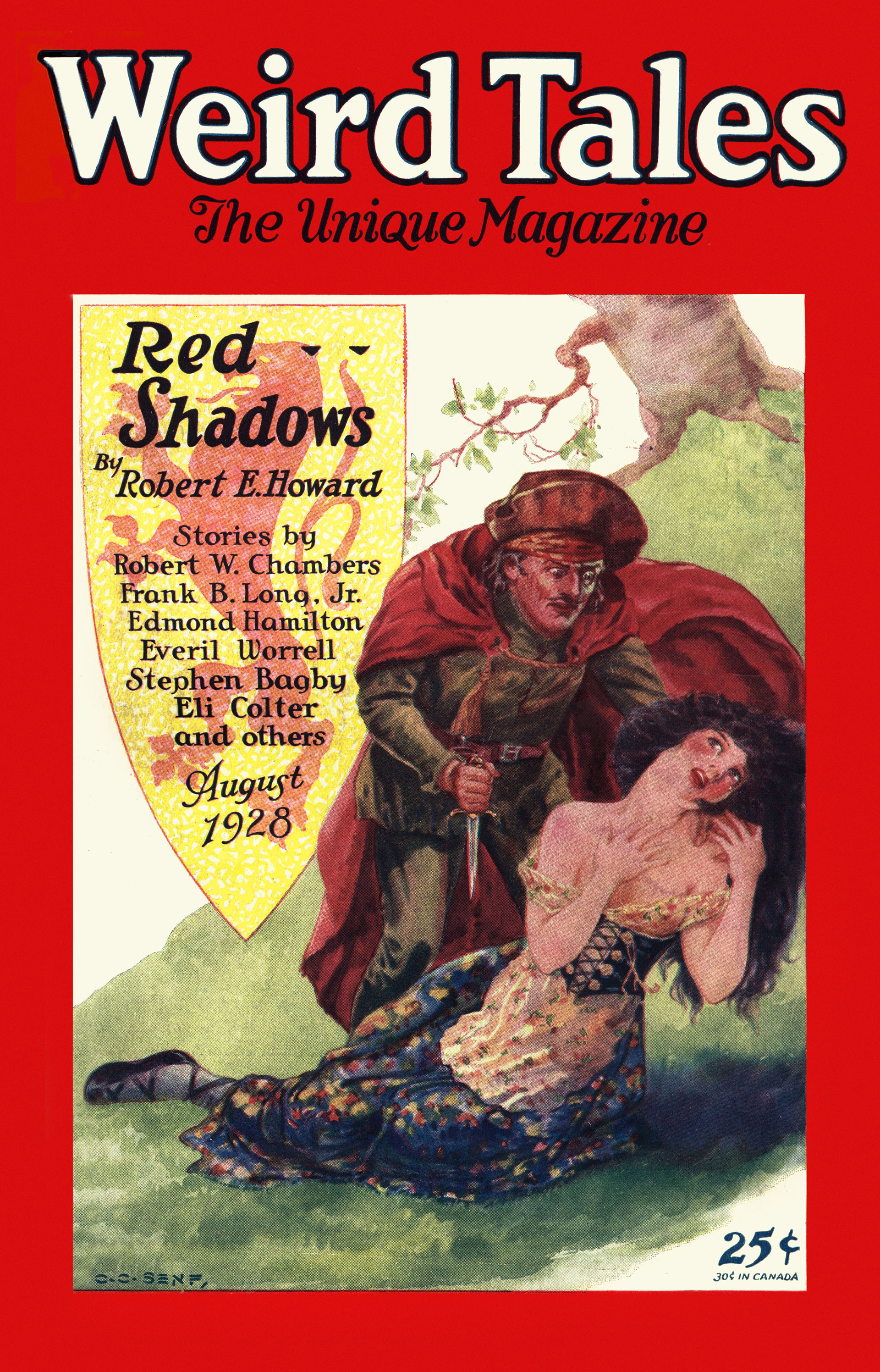 Cimmerian is a word straight out of Greek mythology meaning mythical people who inhabited a land of darkness. Considering Robert E. Howard wrote about Conan of Cimmeria that has its own truth to it. I love the Conan stories.
If you’ve never read Howard’s Conan stories do so. They’re dark (figures), pulpy, and filled with ideas and thoughts of the first half of the 20th century. Howard defines pulp story for me. His life was a bit of a mess if you read about him but he knew how to tell a story and his character spawned a few hundred (thousand?) spin-offs and many credit him with beginning the sword and sorcery sub-genre. Me I just liked the old Frazetta posters of Conan. Look for the out of print versions of his stories that are collected, unabridged reprints of his originals from Weird Tales. If you want to write in a genre, read the genre. Hell, for that matter if you want to write, read everything, inside and outside of your genre and put some tools in your writer tool box.
Codswullop: British word for nonsense or untruth as in that was a bunch of codswallup. It’s not Greek but its what caught my eye today for “c” also. I have to put that in a book sometime. It might not be Cimmerian but it will make you say Crom.
All right. All right. I’m stretching today. Stretching.
Api tou heliou metastethi (Stand a little out of my sun.)
 It’s all Greek to me.
This is my first post on the A-Z challenge and I’ve got my own theme for the month that comes from the book I’m working on now that takes place in 1914 England where Greek and Latin ruled as education in the “classics”. How each of these sayings deals with writers today will be my own stretch. So stop by and see what I come up with.
Api tou heliou metastethi (Stand a little out of my sun.)
So replies Diogenes the Cynic when asked by Alexander the Great if he had any wish he could fulfill. You gotta love that with a rim-shot for punctuation.
Something I recently overheard from a writer at a conference who was published with a big house when asked about the kind of support and publicity campaign she was receiving: “Oh it’s great except they always put me next to the (choose your megastar writer – there are only a few) so I might as well not even be there.”
Me I like being next to the megastars. At Charlottesville, being next to Alma Katsu (The Taker) on a panel meant people on her line (long line) sometimes drifted over to my line when they finished having her sign their book. Hey. You gotta start somewhere. Alma is a very cool writer whom I’ve had the pleasure to meet twice at two different conferences. I can stand in her shadow any day, ’cause one person’s shadow is another person’s sun.
Where is Diogenes when you need him?


 Lunievicz